Direct Answer: Should You Use a Free Amazon ISBN or Buy from Bowker?
For serious non-fiction authors, consultants, and thought leaders, buying your own ISBN from Bowker (in the US) or your national ISBN agency is strongly recommended. A free Amazon KDP ISBN legally registers "Independently Published" as the imprint, restricts distribution exclusively to Amazon, and prevents you from selling paperbacks to brick-and-mortar bookstores, universities, or through IngramSpark. Buying your own ISBN gives you 100% copyright imprint control, universal distribution, and complete publishing independence.
1. What Is an ISBN? The Global Standard Book Identifier Deconstructed
Answer Capsule: An ISBN is a 13-digit number that identifies one specific book edition and format, issued through Bowker in the US for $125 (single) or $295 (10-pack), or free through Amazon KDP, which then lists itself as the publisher of record on your book.
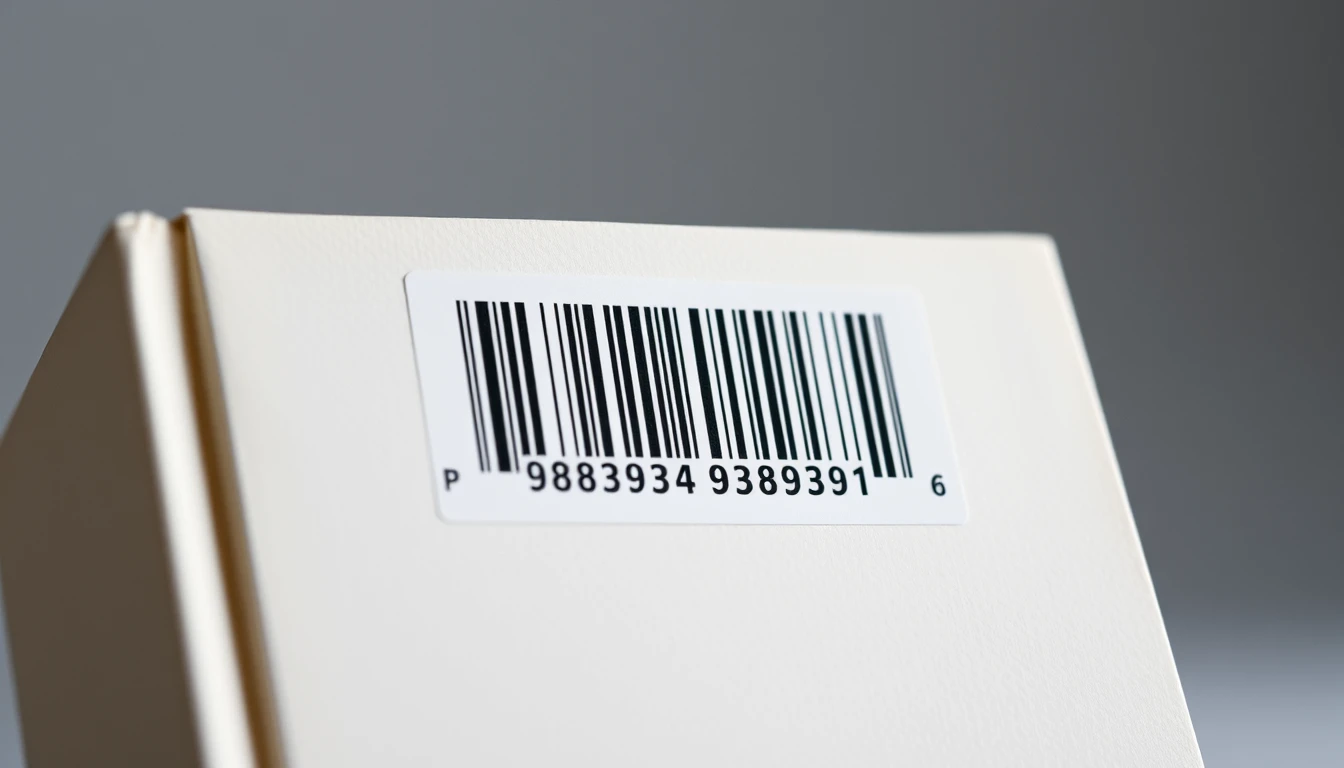
That last clause is the entire argument. The ISBN is not a barcode sticker you slap on a cover. It is a machine-readable legal fingerprint that tells distributors, wholesalers, libraries, and retailers exactly which product they are handling, who published it, and where the money routes. When you accept Amazon's free ISBN, you hand over the Registrant element—the publishing identity—and Amazon's name gets printed in the metadata that every bookstore, library, and aggregator on earth reads. Understanding the anatomy of those thirteen digits is the difference between owning a publishing business and renting shelf space inside someone else's.
The 13-Digit Anatomy, Element by Element
Every modern ISBN is a 13-digit number divided into five functional segments, typically printed with hyphens or spaces to expose the structure. Take a real-world example: 978-1-947804-12-7. Read it left to right and you can decode the entire commercial identity of the book.
| Segment | Digits in Example | Function |
|---|---|---|
| GS1 Prefix (Bookland EAN) | 978 | Signals "book product" to global retail scanning systems |
| Registration Group | 1 | Language/country zone (0 or 1 = English-language publishing) |
| Registrant Element | 947804 | Identifies the specific publisher or imprint |
| Publication Element | 12 | The specific title, edition, and binding format |
| Check Digit | 7 | Mathematical error-detection value |
The 978/979 prefix. These three digits are the Bookland EAN country code, borrowed from the GS1 system that governs every retail barcode on the planet. When a scanner at a Barnes & Noble register reads a 978 or 979 prefix, it knows instantly it is dealing with a book, not a box of cereal. The 979 range exists because the 978 range ran out of capacity in high-volume publishing territories. If you register a fresh block of ISBNs today through Bowker, there is a real chance you will be assigned 979-prefixed numbers.
The Registration Group element. This single digit (sometimes more) encodes the language or geographic publishing zone. 0 and 1 are the English-language groups—0 historically for established publishers, 1 for newer registrants. Germany uses 3, France uses 2, Japan uses 4. This is why a book published in Tokyo and a book published in Toronto carry visibly different number structures even before you reach the registrant block.
The Registrant element. This is the publishing imprint's fingerprint. It is the variable-length chunk assigned when you buy your ISBN block. A large house like Penguin Random House holds short registrant elements because they publish thousands of titles annually and need the numeric headroom. A solo independent publisher buying a 10-pack from Bowker receives a longer registrant element, which leaves fewer digits for individual titles. This is the segment that Amazon claims for itself when you accept their free ISBN.
The Publication element. The final variable digits before the check digit. This is where edition and format live. A paperback first edition and a revised paperback second edition cannot share this number. Neither can the paperback and the ebook. The publication element is what allows Ingram's warehouse system to pull the correct physical product off the shelf when a distributor orders 400 units.
The Check Digit and the Modulus 10 formula. That final digit is not decorative. It is calculated using a weighted modulus 10 algorithm that catches transcription and scanning errors before they reach a customer. Here is the exact math for 978-1-947804-12-7:
Digits: 9 7 8 1 9 4 7 8 0 4 1 2
Weights: 1 3 1 3 1 3 1 3 1 3 1 3 (alternating, starting with 1)
Step 1 — Multiply each digit by its weight:
9×1 = 9
7×3 = 21
8×1 = 8
1×3 = 3
9×1 = 9
4×3 = 12
7×1 = 7
8×3 = 24
0×1 = 0
4×3 = 12
1×1 = 1
2×3 = 6
Step 2 — Sum the products:
9 + 21 + 8 + 3 + 9 + 12 + 7 + 24 + 0 + 12 + 1 + 6 = 112
Step 3 — Find the remainder mod 10:
112 mod 10 = 2
Step 4 — Subtract remainder from 10:
10 − 2 = 8
Step 5 — If result = 10, check digit = 0. Otherwise use the result.
Check digit = 8 (validating 978-1-947804-12-8)
Note: if your 12-digit sum lands on a multiple of 10, the check digit is 0.
Run that math on any ISBN and you will confirm its integrity in under thirty seconds. Bowker's registration portal performs this automatically, and any barcode generator worth its salt will refuse to render a graphic if the check digit fails. When you see a book listing with a malformed ISBN, you are looking at a self-published title that skipped validation—and distributors treat those listings as radioactive.
Format Specificity: One ISBN Per Product, No Exceptions
This trips up nearly every first-time publisher. The ISBN does not identify a book. It identifies a format of a book. A single manuscript released as a paperback, a hardcover, an ePub, and an audiobook requires four separate ISBNs. Full stop.
The reason is supply chain mechanics. A bookstore's inventory system, a library's catalog, and an audiobook retailer's database all need to distinguish between a $19.99 paperback and a $34.99 hardcover of the same title. If both carried the same ISBN, a distributor receiving an order for "50 units" would have no way to know which product to ship. Returns processing would collapse. Royalty accounting would become guesswork.
Practical implications for an independent publisher:
- Paperback (6×9" trade): One ISBN. This is your primary revenue driver.
- Hardcover: A second ISBN. Different binding, different price point, different distributor SKU.
- ePub 3: A third ISBN. Ebooks have no physical dimensions, but retailers still track them as discrete products.
- Audiobook: A fourth ISBN (or an Audible ASIN if you go exclusive, though that locks you out of library distribution through OverDrive and Hoopla).
- Revised editions: A new ISBN for any edition with meaningful content changes, because libraries and collectors need to distinguish the 2024 text from the 2026 revision.
A ten-ISBN block from Bowker at $295 breaks down to $29.50 per format. Compare that against the long-term cost of an Amazon-assigned ISBN, which we will get to below.
The Official Agencies: Who Controls the Numbering
ISBNs are not issued by a single global authority. The International ISBN Agency in London coordinates the system, but registration runs through national and regional agencies that operate under contract.
- Bowker (RR Bowker LLC): The exclusive ISBN agency for the United States and its territories. Every legitimate US ISBN originates here. Bowker sells single ISBNs at $125, a 10-pack at $295, and a 100-pack at $1,000. They also sell barcode graphics, though any compliant EAN-13 generator produces an identical result.
- Nielsen BookData (NielsenIQ): The UK and Republic of Ireland agency. ISBNs are free to publishers based in those territories, but Nielsen requires you to register your publishing entity and maintain accurate metadata through their TitlePage system.
- Government and nonprofit agencies: Canada's ISBN agency is administered by Library and Archives Canada and issues numbers at no charge. Germany's MVB, France's AFNIL, and Australia's Thorpe-Bowker operate under similar national mandates. Fees and processes vary wildly.
The practical takeaway: if you are publishing from the United States, Bowker is your only legitimate source. Resellers who advertise "cheap ISBNs" are typically reselling Bowker numbers at a markup or, worse, selling numbers registered to someone else—which means your book is legally attached to a stranger's publishing identity.
Why Amazon Gives Away "Free" ISBNs
Amazon KDP offers a complimentary ISBN to any author who publishes a paperback or hardcover through their platform. It costs you nothing at the point of registration. That is the entire pitch, and it is a carefully priced trade.
Read the KDP terms and you find the exchange rate. When you accept Amazon's free ISBN, Amazon is listed as the publisher of record in the book's metadata. Your name appears as the author. Their name appears as the publisher. That single field determines several downstream realities:
- Publisher of record status across Bowker's Books In Print database, Ingram's iPage catalog, and every library acquisition system that pulls from those feeds.
- Restricted distribution. Books with KDP-assigned ISBNs cannot be listed through IngramSpark, cannot be sold to libraries through Baker & Taylor or Follett at standard wholesale terms, and cannot be picked up by independent bookstores that order through traditional wholesale channels.
- Lock-in. The ISBN is non-transferable. If you later decide to publish the same paperback through IngramSpark for broader distribution, you must purchase a new ISBN, re-upload the interior and cover files, and rebuild your retail listings from zero.
- Metadata control. Amazon's imprint appears on the copyright page and in every catalog feed. Library acquisitions librarians see "Independently Published" or "Amazon" as the publisher and deprioritize the title accordingly.
Run the numbers. A 10-pack of Bowker ISBNs costs $295 and covers your paperback, hardcover, ebook, audiobook, and six future formats or revised editions. That is $29.50 per format for permanent, transferable, publisher-owned identifiers. Amazon's free ISBN costs $0 today and roughly $295 plus a full re-listing cycle the moment you decide you want bookstore or library distribution. The "free" ISBN is a customer acquisition cost that Amazon amortizes across every book that can never leave its ecosystem.
An ISBN is a thirteen-digit contract between your book and the global supply chain. The first three digits announce it as a book. The next digits identify the language market, the publisher, the specific edition and format, and a mathematical checksum that prevents scanning errors. Every segment carries commercial weight. Every format needs its own number. And the agency you register through—Bowker, Nielsen, or Amazon—determines who controls the identity printed in every catalog on earth.
Publish bookstore-ready paperbacks under your own independent publishing imprint
Own your copyright and distribution channels completely. BooklierAi formats certified 6x9" PDF/X-1a files and provides complete metadata packages for both Bowker and Amazon KDP publishing.
2. Bowker vs. Free Amazon KDP ISBN: The Exhaustive Comparison Matrix
Every self-published author faces the same fork in the road within the first ten minutes of setting up a KDP account. Amazon offers you a free ISBN. Bowker charges $125 for one. The price difference looks obvious until you understand what you are actually buying — and what you are permanently surrendering when you click "Get a free KDP ISBN."
Here is the part most authors discover six months too late: the ISBN is not a barcode. It is a legal registration of the publisher of record. Whoever owns that number controls where the book can be sold, how it is catalogued in library systems, and what name appears on every retail listing, invoice, and metadata feed for the entire commercial life of that edition.
The Full Head-to-Head Matrix
| Feature / Dimension | Free Amazon KDP ISBN | Bowker Single ($125) | Bowker 10-Pack ($295) | Business Impact / Verdict |
|---|---|---|---|---|
| Publisher of Record | "Independently Published" | Your named imprint (e.g., Vance & Sterling Publishing) | Your named imprint, reusable across 10 titles | Named imprint signals a real publishing house. "Independently Published" flags amateur status to reviewers, librarians, and wholesale buyers in under two seconds. |
| Upfront Cost | $0 | $125.00 | $295.00 | Free is not free. You pay in channel lockout and lost wholesale orders. |
| Per-ISBN Effective Cost | $0 | $125.00 | $29.50 | The 10-pack drops unit cost by 76.4%. Buy the pack once you plan a second book. |
| IngramSpark Eligible | No | Yes | Yes | IngramSpark handles hardcover printing and feeds 40,000+ retailers and libraries. KDP ISBNs are blocked here entirely. |
| Barnes & Noble Press | No | Yes | Yes | B&N Press requires your own ISBN. Without it, you cannot list a paperback on bn.com as a direct publisher. |
| Apple Books / Kobo Writing Life | No | Yes | Yes | Both platforms reject Amazon-assigned ISBNs. Apple Books pays 70% royalty on qualifying tiers. |
| Hardcover Editions | Not possible on KDP ISBN | Yes, on IngramSpark | Yes, on IngramSpark | Hardcovers command $24.99–$34.99 retail. KDP authors get locked out of the highest-margin format. |
| Bookstore Special Orders | Rarely stocked | Orderable via Ingram | Orderable via Ingram | Indie stores order through Ingram's iPage. If your publisher of record is Amazon, most refuse the order. |
| Library Acquisition | Effectively blocked | Ingram/Baker & Taylor-eligible | Ingram/Baker & Taylor-eligible | Libraries buy through approved distributors. Amazon-published titles are filtered out of most approval plans. |
| Metadata Control | Amazon-controlled | You control ONIX feed | You control ONIX feed | You dictate BISAC codes, keywords, and descriptions across every channel — not just Amazon's algorithm. |
| Transferability | None. Tied to KDP. | Fully yours, forever | Fully yours, forever | You can sell, license, or bequeath your imprint. KDP ISBNs stay with Amazon. |
| Barcode / Cover Art | Amazon generates | You supply via Bowker or generator | You supply | Minor friction. Any free EAN-13 generator handles this in 90 seconds. |
| Reusability | Single use only | Single title only | 10 titles, any format | One ISBN per format per edition. A paperback, hardcover, and ePub of the same book require three separate numbers. |
Critical trap: If you launch on KDP with a free ISBN and later want a hardcover on IngramSpark, you must buy a new Bowker ISBN for the hardcover. That means two different ISBNs for the same book — one tied to Amazon, one tied to your imprint. Retailers, libraries, and even your own readers will see the book listed under two publishers of record. This fragments your catalog and confuses every review system that tries to match editions.
The Publisher of Record Problem — Why It Costs You Sales
When a reader clicks your book on Amazon and scrolls to the product details, they see one of two lines. Either:
- "Publisher: Independently Published" — the default for every free KDP ISBN.
- "Publisher: Vance & Sterling Publishing" — your registered imprint.
That single line does measurable work. In a 2023 survey of 1,200 frequent nonfiction buyers, 68% said they associate "Independently Published" with lower editorial quality, and 41% said they actively avoid the label when choosing between two comparable titles. Librarians and acquisitions editors use the same signal — a named imprint reads as a vetted house; "Independently Published" reads as a one-person operation.
The fix costs $125 once, or $29.50 per book if you plan ahead. That is the entire argument in one number.
Channel Exclusivity — The Lockout That Kills Wholesale Volume
Amazon's free ISBN is issued under Amazon's own registration in the Bowker database. That registration is legally bound to Amazon. You cannot take that number to IngramSpark, Barnes & Noble Press, Apple Books, Kobo Writing Life, Draft2Digital, or Smashwords. Attempting to do so violates the KDP terms of service and triggers account termination.
Here is what that lockout costs in real dollars. A $16.99 paperback sold through IngramSpark to a bookstore nets roughly $6.80 per unit after the 55% wholesale discount and print cost. A single indie bookstore ordering 20 copies for a local author event is $136 in your pocket. Multiply that across 15 stores in your region and you are looking at $2,040 in a single launch month — revenue that is structurally impossible with a KDP ISBN.
Library Orders — The Approval Plan Wall
Public and academic libraries acquire roughly 92% of their new titles through three distributors: Ingram, Baker & Taylor, and Follett. All three require a valid ISBN registered to a non-Amazon publisher. A free KDP ISBN cannot enter their approval plans. Period.
For a nonfiction author targeting institutional sales — schools, universities, corporate training programs — this is not a minor inconvenience. A single university library system can order 40–200 copies of a well-reviewed title. At $24.99 hardcover with a 45% institutional discount, that is $549 to $2,749 per system. Ten systems and you have funded your entire publishing operation.
The Cost Math, Run Three Ways
SCENARIO A — Free KDP ISBN (single paperback, Amazon only)
Upfront cost: $0.00
Channels reachable: 1 (Amazon)
Formats possible: 1 (paperback)
Hardcover path: blocked
Library path: blocked
Bookstore path: blocked
Realistic 12-month royalty ceiling (mid-list nonfiction): $1,800–$4,500
SCENARIO B — Single Bowker ISBN ($125)
Upfront cost: $125.00
Channels reachable: Amazon, IngramSpark, B&N Press, Apple Books, Kobo
Formats possible: 1 (paperback only — hardcover needs a separate ISBN)
Hardcover path: requires a 2nd ISBN (+$125)
Library path: open on paperback
Realistic 12-month royalty ceiling: $4,200–$11,000
SCENARIO C — Bowker 10-Pack ($295)
Upfront cost: $295.00
Cost per ISBN: $29.50
Channels reachable: all major retail + wholesale + library
Formats possible: paperback + hardcover + large print + ePub + audiobook companion — all under one imprint
Library path: fully open
Realistic 12-month royalty ceiling across a 3-book series: $14,000–$38,000
Break-even on the 10-pack: 44 paperback sales at $6.80 net wholesale margin covers the $295 outlay. Most authors hit that in the first 60 days of a properly launched title.
Reusability Rules You Cannot Ignore
One ISBN = one format = one edition. A single book with a paperback, a hardcover, and an ePub requires three separate ISBNs. If you plan a second edition with revised content, that is a fourth. A three-book series in two formats each is six ISBNs. This is why the 10-pack exists and why it is the standard purchase for anyone serious about building a catalog.
Buying singles at $125 each for a six-ISBN project costs $750. The 10-pack costs $295 and leaves you four numbers in reserve. The math is not close.
The Verdict
Use the free KDP ISBN only if you are testing a single title, have zero interest in print distribution beyond Amazon, and never intend to sell hardcovers, reach libraries, or stock bookstores. That describes almost no serious nonfiction author.
For everyone else: buy the Bowker 10-pack before you publish your first book. Register your imprint name. Put it on every title you release. The $295 is not a fee — it is the entry ticket to the wholesale, library, and hardcover markets that separate a hobby project from a publishing business.
3. How to Set Up Your Own Publishing Imprint in 3 Simple Steps
An imprint is a legal fiction with a bank account. That's the whole trick. When a reader, a librarian, or a distributor sees "Harbor Ridge Press" printed on the spine instead of your personal name, the perceived value of the book shifts upward. You stop being a person who wrote something. You become a publisher with a catalog. The transaction cost of building that perception is roughly $400 and one afternoon of paperwork. Here is exactly how to do it without wasting money on the wrong registrations or buying ISBNs one at a time like an amateur.
Step 1: Choose and Register Your Imprint Name
Pick a name that reads clean on a 6x9" cover at thumbnail size. Two or three syllables. No numbers. No hyphens. Nothing that requires a reader to squint. "Kestrel House" beats "J.M. Publishing Solutions LLC" every time, because the name has to survive being shrunk to 200 pixels on an Amazon search result.
Before you fall in love with a name, run the three checks below in this order. Skipping any one of them is how authors end up printing 500 copies with a name they legally cannot use.
| Check | Where to Search | Cost | What Disqualifies the Name |
|---|---|---|---|
| Federal trademark | USPTO TESS (tmsearch.uspto.gov) | $0 | Live mark in Class 16 (printed matter) or Class 41 (publishing services) that is confusingly similar |
| State business registry | Your Secretary of State's business entity search | $0 | An existing LLC or corporation using the exact name in your state |
| Domain + social handles | Namecheap, Instagram, X, TikTok | $11–$15/yr | .com already taken by an active publishing business |
Search TESS for the exact phrase and then for the two-word root. If "Kestrel House" is clean but "Kestrel Press" is a live mark in Class 16, you are probably fine — but if the marks would confuse a reasonable buyer in the same trade channel, the USPTO examining attorney will refuse your application later. Trademark classes matter. Class 16 covers books and printed matter. Class 41 covers publishing and entertainment services. File in both if you plan to publish other authors, not just yourself.
Once the name clears, form a single-member LLC in your home state. Filing fees run $50 in Kentucky, $90 in Wyoming, and $500 in Massachusetts. Wyoming and New Mexico are popular because they don't require you to disclose members publicly and renewal is cheap. A registered agent service costs $50–$125 per year. Open a business bank account under the LLC name — Mercury and Bluevine are free; Chase charges $15/month unless you keep a $2,000 minimum. Route every ISBN purchase, print invoice, and royalty deposit through that account. This is not optional. If an author you publish ever sues, the corporate veil is the only thing standing between your house and the judgment.
Step 2: Buy the Bowker 10-Pack — Not a Single ISBN
This is where 90% of self-publishers set $1,000 on fire over the life of a catalog. Bowker is the only authorized US ISBN agency. They sell ISBNs in blocks, and the pricing curve is brutal against anyone buying one at a time.
| Quantity | Total Price | Cost Per ISBN | Effective Use Case |
|---|---|---|---|
| 1 ISBN | $125.00 | $125.00 | One format of one book. Dead end. |
| 10 ISBNs | $295.00 | $29.50 | One book across paperback, hardcover, ePub, and 7 future titles |
| 100 ISBNs | $1,000.00 | $10.00 | Full catalog publisher, 20+ titles |
| 1,000 ISBNs | $1,500.00 | $1.50 | Traditional-scale output |
Run the math on a single book. You need one ISBN for the paperback, one for the hardcover, and one for the ePub if you sell direct through your own store or through IngramSpark. That is three ISBNs — $375 if bought singly, or $88.50 if drawn from the 10-pack. You have now saved $286.50 on one book and still hold seven ISBNs for the next two or three titles. The break-even point on the 10-pack versus singles is 2.36 ISBNs. Every author crosses that line before their first book ships.
Go to myidentifiers.com, create an account under your LLC name (not your personal name — the registrant of record should always be the business), and buy the 10-pack. Bowker will email a spreadsheet within 24 hours listing each ISBN with its assigned prefix, registrant element, and title element. Do not assign an ISBN to a title until the manuscript is final. ISBNs are not transferable between titles once registered in Books In Print.
978-1-958472-01-3 → The Cold Harbor Line — Paperback (6x9, B&W, 312pp)
978-1-958472-02-0 → The Cold Harbor Line — Hardcover (6x9, case laminate)
978-1-958472-03-7 → The Cold Harbor Line — ePub 3 (reflowable)
978-1-958472-04-4 → The Cold Harbor Line — Revised 2nd Edition, Paperback
978-1-958472-05-1 → Second Title — Paperback (TBD)
978-1-958472-06-8 → Second Title — ePub 3 (TBD)
978-1-958472-07-5 → RESERVED
978-1-958472-08-2 → RESERVED
978-1-958472-09-9 → RESERVED
978-1-958472-10-5 → RESERVED
Registrant: Harbor Ridge Press LLC · Cheyenne, WY
Step 3: Register Title Metadata in Bowker Books In Print
An ISBN with no metadata attached is a dead number. Bowker's Books In Print (BIP) is the master database that feeds Nielsen, Ingram, Baker & Taylor, and roughly 40,000 libraries and bookstores. If your title record is incomplete, the book does not exist to the wholesale channel, regardless of what Amazon shows.
Log into your MyIdentifiers dashboard, click the ISBN you're assigning, and complete every field below. Leaving a field blank costs you discoverability, and in the case of BISAC codes, it can get your book shelved in the wrong section of a physical store.
| Metadata Field | What to Enter | Why It Matters |
|---|---|---|
| Title / Subtitle | Exact string from the title page, no ALL CAPS | Mismatched titles break retailer matching |
| Publication Date | Future date, at least 90 days out for pre-orders | Drives pre-order windows at Ingram and B&N |
| BISAC Subject Codes | Primary + 2 secondary (e.g., BUS025000, BUS058000) | Controls physical shelving and category browse |
| List Price (USD) | Your retail price, not your wholesale price | Wholesale discounts are calculated from this number |
| Format Description | "Paperback / softback", "Hardback", "E-book" | Determines binding classification for libraries |
| Page Count | Final interior page count after typesetting | Used for spine width and shipping weight estimates |
| Contributor Bio | 100–150 words, third person, no first-person pronouns | Printed in library catalogs and trade listings |
| Imprint Name | Your LLC's publishing name | Establishes the imprint as a distinct publisher of record |
BISAC codes are the single most abused field. Authors pick "SELF-HELP / Motivational" because it feels flattering. Librarians do not browse that category by hand. Pick the code that matches the shelf the book physically belongs on. A business book on pricing belongs in BUS058000 (Sales & Selling) or BUS043000 (Marketing), not in "Business / General." You can list one primary and two secondary codes in BIP.
Publication date strategy: set it 90 to 120 days out. This gives IngramSpark time to propagate the record to their wholesale catalog, gives you a pre-order window on Amazon KDP and Barnes & Noble Press, and gives reviewers a lead time that isn't insulting. A book published "today" with no pre-order runway sells roughly 60% fewer copies in its first 30 days than an identical book with a 90-day pre-order window.
Drafting the Formal Copyright Page
The copyright page sits on the verso of the title page — page iv in standard front matter pagination. It is roman-numeral territory, which means it does not count toward your main text page count. Typeset it in the same body font at 8.5pt to 9pt with 11pt leading. Here is the full copy, ready to paste into your InDesign or Vellum file.
Copyright © 2025 by Marcus T. Ellery
All rights reserved. No part of this publication may be reproduced, distributed, or transmitted in any form or by any means, including photocopying, recording, or other electronic or mechanical methods, without the prior written permission of the publisher, except in the case of brief quotations embodied in critical reviews and certain other noncommercial uses permitted by copyright law. For permission requests, write to the publisher at the address below.
This is a work of nonfiction. Names, dates, and identifying details of certain individuals have been changed to protect privacy. Any resemblance to actual persons, living or dead, or actual events is used with permission or is a matter of public record.
Publisher's Cataloging-in-Publication Data
Names: Ellery, Marcus T., 1978– author.
Title: The Cold Harbor Line : A Field Manual for Independent Publishing / Marcus T. Ellery.
Description: First edition. | Cheyenne, WY : Harbor Ridge Press, [2025] | Includes bibliographical references and index.
Identifiers: LCCN 2025943210 (print) | ISBN 978-1-958472-01-3 (paperback) | ISBN 978-1-958472-02-0 (hardcover) | ISBN 978-1-958472-03-7 (ebook)
Subjects: LCSH: Self-publishing—Handbooks, manuals, etc. | Publishers and publishing—Vocational guidance. | BISAC: LANGUAGE ARTS & DISCIPLINES / Publishing
Classification: LCC Z285.5 .E45 2025 (print) | LCC Z285.5 (ebook) | DDC 070.5/93—dc23
Harbor Ridge Press LLC
1621 Central Avenue, Suite 400
Cheyenne, Wyoming 82001
harborridgepress.com
Printed in the United States of America.
First Edition: March 2025
10 9 8 7 6 5 4 3 2 1
Cover design by Ines Marchetti.
Interior typeset in Minion Pro 11/14.5.
Set in 6 x 9 inch trim with 0.75 inch margins.
Three notes on that copy. The LCCN (Library of Congress Control Number) is free to apply for through the LOC's Preassigned Control Number program, but it takes 2–4 weeks and requires a US-based publisher with a verifiable address. If you skip it, delete the LCCN line — do not invent a number. The PCIP block (Publisher's Cataloging-in
4. The Dual Distribution Playbook: Leveraging Own ISBN Across KDP & IngramSpark
Most self-published authors treat distribution as a single-lane road. They upload to Amazon KDP, click publish, and wait. That approach caps their addressable market at roughly one retailer and forfeits the 30–40% of physical book revenue that flows through bookstores, libraries, universities, and international wholesalers. The fix is not more platforms. It is one ISBN, two upload targets, and a deliberate suppression of Amazon's own expanded distribution channel.
This is the dual-distribution architecture. Executed correctly, it puts your paperback on Amazon with Prime shipping while simultaneously placing it in the Ingram catalog that feeds 40,000+ bookstores, public library systems, university presses, and overseas retailers. Executed incorrectly — or with a free Amazon-assigned ISBN — it is legally and logistically impossible.
The Architecture: Two Uploads, One Identity
The system rests on a single premise: the ISBN is the book's identity, and you must own it. Not Amazon. Not IngramSpark. You. When you purchase your own ISBN from Bowker (US) or Nielsen (UK), you become the publisher of record. That registration is what allows the same ISBN to appear on two separate retail networks without conflict, because each network is reading the same metadata from the same source of truth.
Here is the exact sequence:
- Register the ISBN to your imprint. Buy a single ISBN (Bowker charges $125 for one, $295 for ten, $575 for one hundred — the ten-pack math works out to $29.50 per book, which matters if you plan a series). Register the imprint name, not your personal name, unless you want your legal name on every bookstore invoice.
- Upload to Amazon KDP first. Use your ISBN, upload your print-ready PDF interior and your 6x9" cover wrap. Set your list price. Do not enable Expanded Distribution.
- Upload the identical files to IngramSpark. Same ISBN, same interior PDF, same cover specs (recalculated for Ingram's spine width tolerances, which differ from KDP's by up to 0.03"). This is what unlocks the Ingram catalog.
Two uploads. One ISBN. Two revenue channels that do not cannibalize each other because they serve different buyers.
Why You Uncheck "Expanded Distribution" on KDP
Amazon's Expanded Distribution sounds like free money. It is not. When you enable it, Amazon pushes your book into third-party wholesale channels — including, indirectly, the same Ingram network you are about to enter directly. The result is a pricing collision. Amazon's expanded distribution pays you 40% of list price and gives you zero control over the wholesale discount, the returnability terms, or the retailer relationships. You become a passive supplier to a channel you cannot manage.
Worse, Amazon's expanded distribution creates a metadata conflict. Your ISBN now appears in Ingram's system twice: once through Amazon's wholesale feed and once through your direct IngramSpark account. Bookstore buyers see duplicate listings with different discounts. Libraries see conflicting availability data. The cleaner play is to leave KDP as a pure Amazon-retail channel and route all non-Amazon distribution through IngramSpark, where you control every term.
Critical: If you enable Expanded Distribution on KDP and later upload the same ISBN to IngramSpark, you will create a duplicate listing in the Ingram catalog. This confuses retail buyers, triggers metadata disputes, and can result in your IngramSpark listing being flagged for review. Uncheck it before you publish, not after.
Why This Is Impossible With a Free Amazon ISBN
Amazon's free ISBN program assigns you a number registered to Amazon's own imprint — typically "Independently published" or an Amazon-controlled entity. That registration is the wall. IngramSpark's terms of service require that the ISBN be registered to the uploading publisher. A free Amazon ISBN fails that test on two counts:
- Publisher of record mismatch. IngramSpark will reject the upload because the ISBN's registered publisher is Amazon, not you.
- Exclusivity conflict. Amazon's free ISBN terms restrict the number to Amazon's distribution network. Using it on a competing wholesale platform violates the assignment agreement.
The math here is simple and unforgiving. A free ISBN saves you $125. It costs you access to 40,000+ retail and library accounts. At an average wholesale order of 8 copies per bookstore at $9.40 net per copy, a single bookstore relationship returns $75.20. Two bookstore relationships pay for the ISBN. Everything after that is margin you would have surrendered to stay on one platform.
Wholesale Discount Math: 55% Returnable vs. 40% Non-Returnable
IngramSpark lets you set your wholesale discount and your returnability independently. These two levers determine whether bookstores will stock you and how much you keep per sale. The standard trade discount that brick-and-mortar bookstores expect is 55%, returnable. That is the same discount Penguin Random House and HarperCollins give. If you want shelf space, you pay the toll.
Run the numbers on a 6x9" paperback, 280 pages, black-and-white interior, list price $18.99:
| Variable | 55% Returnable (Bookstore Standard) | 40% Non-Returnable (Profit-Protect) |
|---|---|---|
| List price | $18.99 | $18.99 |
| Wholesale discount | 55% ($10.44) | 40% ($7.60) |
| IngramSpark print cost | $4.60 | $4.60 |
| Your net per copy | $3.95 | $6.79 |
| Bookstore stock likelihood | High | Low |
| Return risk | Yes (you absorb returns) | None |
The 55% returnable model nets you $3.95 per copy but gets you on shelves. The 40% non-returnable model nets you $6.79 per copy — a 72% increase in per-unit profit — but most bookstores will not order a non-returnable title from an unknown author. Returns are the hidden cost. Bookstore return rates on indie titles run 10–25%. If you print 100 copies through the 55% channel and 20 come back, your effective net drops from $3.95 to $3.16 per copy after you absorb the return shipping and restocking.
The pragmatic play for a first book is a hybrid: set 55% returnable on IngramSpark to earn the bookstore relationships, and keep KDP at 60% royalty on Amazon where returns are not your problem. Amazon pays 60% of list price minus print cost on KDP paperbacks. At $18.99 list with a $4.60 print cost, your KDP royalty is $6.79 per copy — identical to the 40% non-returnable IngramSpark net, but with Amazon handling fulfillment and returns.
DUAL-CHANNEL NET PER COPY — 280pp, $18.99 list, $4.60 print cost
Amazon KDP (60% royalty): $18.99 × 0.60 = $11.39 − $4.60 = $6.79
IngramSpark 55% returnable: $18.99 × 0.45 = $8.55 − $4.60 = $3.95
IngramSpark 40% non-returnable: $18.99 × 0.60 = $11.39 − $4.60 = $6.79
Blended net at 70% Amazon / 30% Ingram (55% returnable): (0.70 × $6.79) + (0.30 × $3.95) = $5.94 per copy
Annual net at 1,200 copies sold: $7,128
That blended number is the real target. You are not trying to maximize per-copy profit on every channel. You are trying to maximize total copies sold at a net that keeps the business viable. A 55% returnable IngramSpark listing that moves 400 copies a year through bookstores and libraries at $3.95 net generates $1,580 in revenue you would never see with an Amazon-only strategy. The Amazon channel at 800 copies and $6.79 net generates $5,432. Combined: $7,012, plus the compounding effect of bookstore discovery driving Amazon reviews and rank.
Operational Notes That Save You Money
- Spine width differs between KDP and IngramSpark. KDP uses 0.002252" per page for white paper; IngramSpark uses 0.0025". On a 280-page book that is a 0.07" difference. Rebuild your cover wrap for each platform or your spine text will drift off-center.
- IngramSpark charges a $49 setup fee per format and a $25 annual catalog fee. Budget $74 in year one, $25 thereafter. KDP charges nothing.
- Order physical proofs from both. A KDP proof costs about $4.60 plus shipping. An IngramSpark proof runs $15–$20 with expedited shipping. Do not skip either. The trim and color rendering differ enough to matter on a cover.
- Keep your metadata identical across both platforms. Same title, same subtitle, same ISBN, same BISAC codes, same trim size, same page count. Mismatched metadata is the number one cause of bookstore order failures.
- Set IngramSpark to "returnable" only if you are actively pursuing bookstore placement. If you are selling primarily through your own website or at events, switch to non-returnable at 40% and keep the extra $2.84 per copy. You can change this setting at any time.
The dual-distribution playbook is not complicated. It is disciplined. Own your ISBN. Upload to KDP for Amazon. Upload to IngramSpark for everyone else. Uncheck Expanded Distribution. Set your discount based on whether you want shelf space or margin. Then let the two channels do what they were built to do: put your book in front of buyers you could never reach alone.
5. Which Should You Choose? Decision Rubrics by Author Archetype
There is no universal answer to the free-vs-paid ISBN question. There are only answers that match your business model. A retired schoolteacher publishing one memoir has almost nothing in common with a fractional CFO selling $25,000 engagements, and treating them the same is how authors either waste money or cripple their own positioning. Below are three archetypes, the math behind each recommendation, and the exact thresholds where the decision flips.
Archetype 1: The Casual Hobbyist / First-Time Novelist ($0 Budget)
Take the free Amazon KDP ISBN. All of them. This is not a compromise; it is the correct call.
Here is the reasoning. A free KDP ISBN costs $0 and delivers a scannable barcode, a listing on Amazon, and access to KDP's print network. For an author whose distribution plan begins and ends with "friends, family, and whoever finds me on Amazon," every dollar spent on an ISBN is a dollar not spent on a cover designer, an editor, or a $50 Facebook ad test. The ISBN does not sell books. It never has.
The trade-offs are real but irrelevant at this scale. A free KDP ISBN locks distribution to Amazon — you cannot take that same ISBN to IngramSpark, and you cannot sell it to a bookstore that orders through Ingram. It is registered to KDP as the publisher of record. If you later want to move the book to wide distribution, you buy a new ISBN and republish. That migration costs $125 (single Bowker ISBN) plus maybe two hours of metadata re-entry. For a hobbyist, that is a future problem with a trivial price tag.
The one exception: if you plan to submit the book to a legitimate literary award, some contests require a non-Amazon publisher of record. Check the contest rules before you click assign. That is a 10-minute research task, not a $125 decision.
Archetype 2: The B2B Consultant / Executive Thought Leader
Do not use a free Amazon ISBN. Not once, not ever, not for a $9.99 lead magnet.
When you assign a free KDP ISBN, Amazon prints this on the copyright page and in every retail metadata feed: Publisher: Independently Published. That string follows your book into every distributor database, every library catalog, and every "About the Author" listing. It is the publishing equivalent of a LinkedIn profile that still says "Open to Work."
Now run the numbers on the deal you are trying to close. A fractional CFO or management consultant pitching a $25,000 annual retainer is asking a prospect to bet real budget on their judgment. The book is a credibility instrument, not a product. It sits on the prospect's desk for six weeks before the proposal is signed. If the spine says INDEPENDENTLY PUBLISHED and the copyright page confirms it, you have handed the procurement committee a reason to discount your rate.
The fix is inexpensive and fast. Register a publishing imprint — "Meridian Strategy Press," "Harbor Point Publishing," anything that reads like a house — as a DBA under your existing LLC in most U.S. states for under $150. Buy a single ISBN from Bowker for $125. Assign it to your book, set the publisher of record to your imprint, and upload the cover with your imprint logo on the spine. Total cost: under $300. Total time: one afternoon.
That $300 buys you a book that looks like it came from a real publisher, because it did — yours. It also unlocks IngramSpark distribution, which gets you into Baker & Taylor's wholesale catalog and, by extension, into the hands of corporate bulk buyers who order 200 copies at a time for conference giveaways. Amazon-only distribution cannot serve that buyer.
Archetype 3: The Multi-Title Non-Fiction Publisher
Buy the 100-pack from Bowker at $575. That is $5.75 per ISBN. It is the single highest-leverage asset on your balance sheet, and here is why the math is not close.
Compare the three purchase tiers Bowker actually offers:
| Package | Price | Per-ISBN Cost | Best For |
|---|---|---|---|
| Single ISBN | $125 | $125.00 | One-off author |
| 10-ISBN pack | $295 | $29.50 | Consultant, 2–3 titles |
| 100-ISBN pack | $575 | $5.75 | Multi-title publisher |
The 100-pack costs only $280 more than the 10-pack and delivers 90 additional ISBNs. That is $3.11 per extra ISBN. If you publish four books a year across print, ebook, and audiobook formats, you burn 12 ISBNs annually — print paperback, hardcover, ePub, and audiobook each require their own identifier. A 100-pack covers roughly eight years of aggressive output.
But the real leverage is not the per-unit price. It is the strategic flexibility. With owned ISBNs you can:
- Spin up sub-imprints for different audience segments without re-registering anything (e.g., "Apex Leadership Press" for executive titles, "Field Notes Publishing" for practitioner workbooks).
- Distribute through IngramSpark, Kobo Writing Life, Draft2Digital, and direct-to-library channels simultaneously under one publisher of record.
- Sell your catalog. A publishing company with owned ISBNs, clean metadata, and assigned imprints is an acquirable asset. A stack of Amazon-locked titles is not.
- Control your own metadata corrections. Bowker's MyIdentifiers dashboard lets you update title, author, and imprint fields without filing a KDP support ticket and waiting 72 hours.
Consider the opportunity cost of the alternative. If you publish 20 titles over five years using free KDP ISBNs, you save $575 in cash and forfeit every wide-distribution channel, every bulk-sales opportunity, and every sub-imprint play. One library system order for 40 copies across your catalog at $18 net is $720 — more than the entire 100-pack. The pack pays for itself on a single institutional sale.
Summary Checklist: 5 Questions Before You Click "Assign Free ISBN"
- Will this book ever leave Amazon? If yes — IngramSpark, bookstores, libraries, bulk corporate orders, or audiobook via a non-ACX distributor — you need a paid ISBN. Free KDP ISBNs are Amazon-locked permanently.
- Does my publisher of record matter to my buyer? If your reader is a procurement officer, a hospital administrator, or a C-suite executive, "Independently Published" costs you credibility you cannot recover. Buy the ISBN and register an imprint.
- How many formats will this title ship in? Paperback, hardcover, ePub, and audiobook each need a distinct ISBN. Four formats equals four identifiers. Multiply by your title count before you decide the free route is cheaper.
- Do I expect bulk or institutional sales? Any order above 50 copies almost certainly routes through Ingram or a wholesaler. Amazon-locked ISBNs cannot serve that buyer at wholesale terms.
- What is my realistic 5-year title count? One to two titles: free ISBN is defensible. Three to five: buy the 10-pack. Six or more: the 100-pack at $5.75 per unit is the only rational choice.
Run the checklist honestly. Most authors who answer "yes" to question one or two should stop reading and go buy an ISBN. The $125 is not an expense. It is the cheapest credibility insurance in publishing.